Categories
Tech

Why is Adobe Pushing AI?

As of June 2023, Adobe has been selling package deals to businesses that give their employees access to Firefly, their AI program. This is supposed to be a tactic to promote itself as a business-friendly alternative to other open-source programs. The biggest downside I see to this is the fact that businesses aren’t known to keep employees they see as pointless, and with easy access to a program that delivers images with a short statement, the first people they will get rid of are graphic designers.  

Businesses have already been caught trying to pass off AI images as human-made, and that will only get worse as AI is more readily available. Every article by Adobe on AI emphasizes how it will help artists create more work faster, which is another issue. If businesses pay for access to Firefly, they’ll expect their designers to pump out work quickly, which will diminish the quality of their creations. People tend to be impatient, and if they have access to software that creates images that they deem acceptable in seconds, they will get rid of the artist who creates everything from a blank page, even if the quality is better. 

I believe the reason Adobe is pushing its AI program is to make money. They want to compete with businesses like Google and Microsoft, and instead of focusing on their already large customer base, they want to be able to sell to anyone with money. Unfortunately, the goal of businesses is to make money. 
Categories
Design

AI is not Art

Adobe Firefly is one of Adobe’s latest developments. Its purpose is to “create” or “add on” to existing images by using “AI”. I put these in quotes because none of these things are true. AI stands for “artificial intelligence” and, while this is a different issue for me, every program being called “AI” is not at all intelligent. It’s an algorithm that’s been trained to piece together images from a database, usually not even the creator’s own images, to “create” a new image. My biggest issue with AI is that it harvests from other people’s work. My second biggest problem is that people try to pass it off as their own original work, or the people that argue that they created it because they had to type in a prompt.  

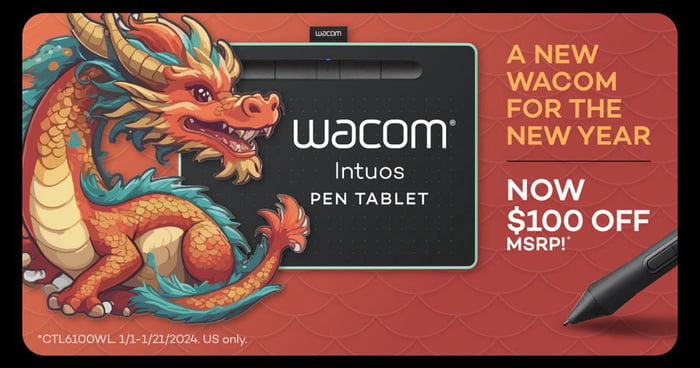
A complaint that many people have with AI is that companies are using it instead of actually paying artists. Recently, Wacom, a company that creates products for artists, was under fire because they used AI to create marketing materials for their Year of the Dragon Twitter post. Wizards of the Coast, a company that makes things like trading cards and digital games, admitted to using AI art after they insisted that their work was entirely human-made. Companies already do what they can to spend as little as possible on people, and if they feel they can get away with using free software to “create” images, they will. 

In modern times, art is undervalued, and the widespread use of AI “art” will continue that trend. I think everyone has gone to a modern art museum, either with a friend or alone, and thought or discussed how they “could do that themselves.” This idea was reinforced by the NFT trend when people were creating, selling, and trading digital images of what seemed to be the same ugly monkey in different outfits. But that isn’t what art is about. 

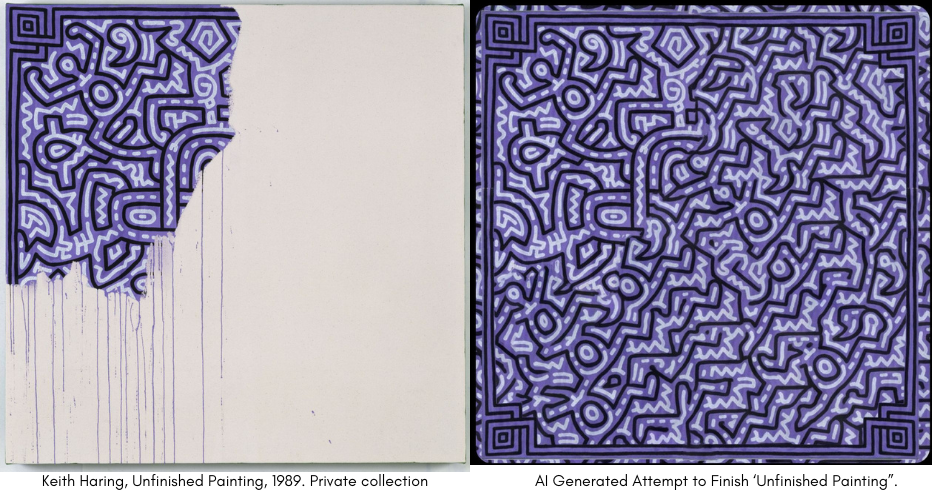
I believe art is about showing emotion and expressing ideas and capturing beauty. All of that is lost when it’s “created” by an algorithm designed to steal and splice. In 1989, Keith Haring, a gay American artist, created “Unfinished Painting.” It was purposefully left unfinished to serve as a commentary on AIDS and as a reminder of how the AIDS epidemic affected everyone, but especially the queer community. Recently, a Twitter user used AI to “finish” this piece. Allegedly, it’s supposed to have been satire, but the act was incredibly disrespectful and it’s an insult to the artist and every queer induvial who suffered from the AIDs epidemic.  

AI is incapable of feeling and thinking, and therefore cannot create art.